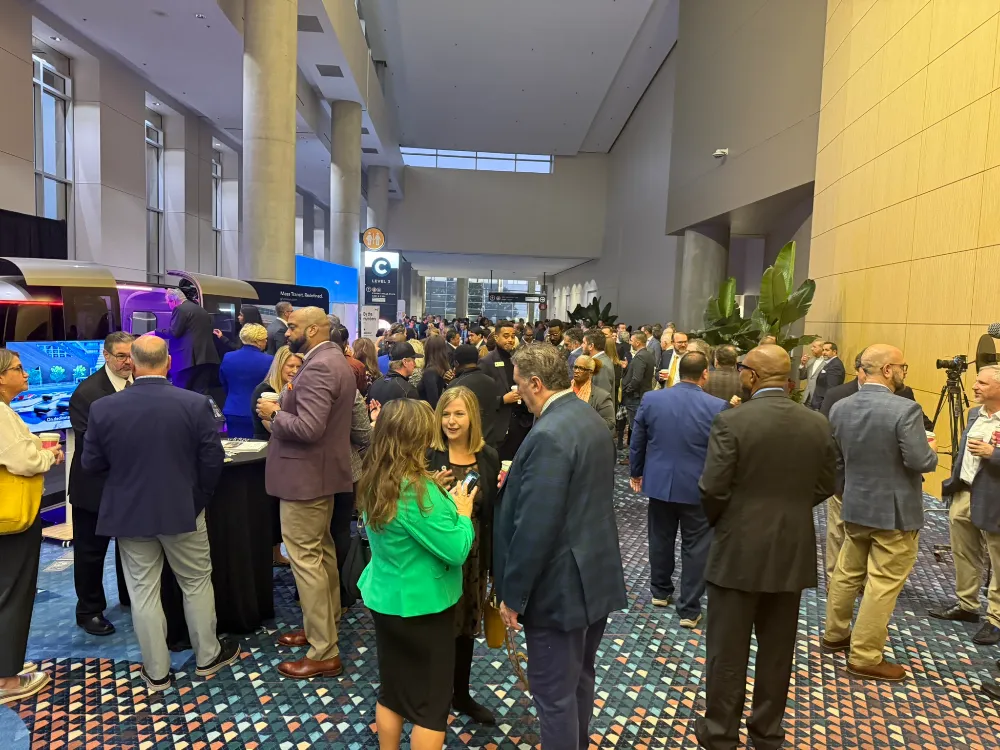

Events are not logistical exercises—they are strategic inflection points. When engineered with purpose, events become catalysts for business growth, cultural transformation, and enduring ROI.
Events as Strategic Business Tools
For decades, organizations have treated events as operational necessities: conferences to execute, launches to deliver, celebrations to check off. The prevailing mindset often reduces events to logistics, viewing them as cost centers rather than value generators. In the rush to manage venues, schedules, and suppliers, the strategic potential of an event is too often left untapped.
At Abstract Elements, we challenge this convention wholly. We believe that events are not simple gatherings—they are meticulously architected experiences designed to deliver measurable business outcomes. Every decision is intentional. Every detail has purpose. Our philosophy: We don’t plan events—we engineer experiences. Each event, whether a leadership summit or a product launch, is a platform for organizational transformation and competitive advantage.
Redefining the Landscape: Event Experience Architecture
“Event planning” implies a checklist. “Event Experience Architecture” signals a paradigm shift—one from logistics to foresight, from transactional to intentional. Architecture is about vision and structural integrity. Applied to events, it elevates the entire discipline.
Event Experience Architecture is multidisciplinary. It is the fusion of behavioral psychology, advanced audience analytics, spatial design, digital integration, and operational mastery. It centers on one mission: to guide the audience through a transformative journey aligned with business imperatives.
Outcomes, Not Just Outputs
Legacy event thinking emphasizes deliverables: booked venues, confirmed speakers, smooth agendas. Architecture focuses on outcomes: Did the audience shift perception? Have relationships deepened? Is the business measurably stronger? At Abstract Elements, every element is reverse-engineered from a defined strategic objective. This is the science of audience journey in action.
Understanding the Audience Journey: The Core of Engineering Experience
True experience engineering begins with a profound insight: audiences are not passive recipients—they are protagonists in a narrative designed for business impact. Moving an audience is both a science and an art. It demands anticipation, empathy, and the discipline to align every sensory and cognitive touchpoint with intent.
Mapping the Journey
We start with journey mapping, a rigorous process that charts every phase of an audience’s engagement—from first awareness to in-event immersion, and beyond. We deploy data-driven personas to understand not just who is in the room, but what moves them, what inspires trust, and what facilitates decisive action.
Every audience has a journey arc—anticipation, arrival, discovery, connection, activation, and memory. Our task is to architect each phase with precision:
- Anticipation: How does pre-event content prime audience expectations?
- Arrival: What physical and digital cues welcome participants and signal brand ethos?
- Discovery: Are opportunities for learning, innovation, and serendipity intentionally engineered?
- Connection: How are networks created, new alliances sparked, and peer insights catalyzed?
- Activation: What strategic calls to action foster commitment and business results?
- Memory: How do the moments linger, extending value and reinforcing messages post-event?
This comprehensive approach transforms events from isolated moments to orchestrated journeys, leaving tangible business and cultural impact.
The Science Behind Engagement and Impact
Event Experience Architecture draws from cognitive science and behavioral economics, leveraging the psychology of attention, memory, and motivation. Abstract Elements applies these principles across every dimension:
- Attention Engineering: We design with rhythm, contrast, and novelty to combat decision fatigue and ensure that key messages cut through.
- Emotional Resonance: Experiences are engineered to elevate emotion—excitement, trust, belonging—because emotion drives memory and action.
- Persuasion Architecture: Framing, social proof, reciprocity, and narrative arc amplify call-to-action moments.
- Spatial and Sensory Alignment: Physical and digital environments are calibrated to amplify focus and reinforce strategic messaging at every phase.
By applying cognitive science, we ensure that every interaction—on and off the stage—is a lever for business outcomes.
From Investment to ROI: Events as Value Multipliers
Traditionally, event ROI is measured on surface metrics—attendance, applause, post-event surveys. While necessary, these markers are insufficient for organizations seeking a strategic edge. Real value lies in:
- Network Activation: Did new business or partnership opportunities materialize?
- Organizational Alignment: Are teams mobilized under a unified vision or initiative?
- Strategic Signals: Has the event moved markets, influenced investor or media sentiment, or shaped industry narratives?
- Behavioral Shifts: Are participants adopting new mindsets, tools, or practices after the event?
Abstract Elements applies meticulous pre- and post-event analytics to close the loop, ensuring actionable insights translate to future business gains.
Intention at Every Layer: The Abstract Elements Approach
The difference is by design. With Abstract Elements, every element of the event is integrated into a whole—purposeful, measured, and impactful. This is not about overproducing or inflating budgets. It is about linking every decision to business imperatives.
How Event Experience Architecture Comes to Life
- Strategic Alignment: We see the event as a lever for a larger business agenda—merger integration, product transformation, market repositioning, or cultural renewal.
- Audience Segmentation: Not all segments have the same needs, motivations, or metrics for success. Experiences are engineered for maximum relevance.
- Multi-Sensory Design: Sound, texture, lighting, and movement are orchestrated to support cognition and signal meaning.
- Technology Integration: Digital platforms, data capture, AI-driven personalization, and analytics are leveraged as strategic tools, not mere add-ons.
- Post-Event Ecosystem: Value does not vanish when the venue lights go off. We architect post-event engagement to sustain momentum and maximize returns.
Our methodology goes beyond “what was delivered” to answer “what was changed?” and “what was gained?” Events engineered this way do not just fill calendars—they accelerate missions.
Challenging the Status Quo: Why Organizations Must Evolve
The business climate is volatile, attention is scarce, and standard event models are no longer sufficient. The organizations that succeed are those that reimagine every touchpoint as a tool for value creation.
Choosing Abstract Elements is a declaration: events are no longer costs to compress, but assets to engineer. This mindset unlocks new performance thresholds:
- Greater alignment between event investment and business outcomes
- Amplified influence on key audiences—internal and external
- Faster adoption of new strategies and innovations within the enterprise
- Stronger, more resonant employer and customer brands
The science of audience journey is no longer optional—it is essential for organizations competing in a world where every interaction matters.
Event Experience Architecture in Action: Real Impacts, Measurable Gains
Consider a technology client launching a market-defining platform. Conventional thinking might focus on logistics—the right venue, a dynamic keynote, seamless catering. But by adopting an Event Experience Architecture lens, the entire environment is engineered for strategic impact:
- Audience insights identify micro-segments—investors, adopters, media—and unique journeys are mapped for each.
- Engagement zones create “experience laboratories” where participants experiment with new products and share feedback in real time.
- Strategic interventions, from curated networking moments to custom digital content, actively guide the audience toward advocacy and partnership.
- Analytics platforms capture behavioral data, feeding insights into downstream sales and product development cycles.
The result? Not just a well-received launch, but sustained partnerships, deeper market penetration, and a culture of innovation hardwired into the organization.
The Future Is Engineered: A New Standard for Strategic Events
As organizations look to the future, mediocre events will feel indistinguishable and irrelevant. Forward-thinking leaders will instead demand experiences that shift beliefs, activate new behaviors, and move business metrics. This requires a new standard—one rooted in the science of audience journey and realized through the rigor of Event Experience Architecture.
Abstract Elements exists for bold brands and organizations who refuse to accept the status quo. We believe events are critical business assets—when engineered, not just planned. Every detail, every cadence, every touchpoint is an opportunity to drive differentiation, engagement, and value.
The next era of business growth will be shaped by leaders willing to challenge legacy thinking. Event Experience Architecture is how they will unlock exponential ROI, cultural transformation, and enduring market impact. At Abstract Elements, this is more than a method—it is our mandate.